“Dismasted !”
In 1895, the Tea Clipper Cutty Sark was 25 years old and, by the standards of the time, nearing the end of its commercial life. Steamships were the future and Cutty Sark’s owner, John Willis, was 78 years old and had been reducing the size of his fleet for some time planning to retire from business and dispose of the remainder as soon as possible. He found a buyer for his old clipper in Portugal where the Ferreira Company acquired her for £1,250. That proved to be a very good deal indeed because they carried on using her to earn them money for another 27 years.
When the ship was bought by the Portuguese company, her new owners re-named her Ferreira but, as you probably know, sailors the world over are a superstitious bunch and it was considered unlucky to change the name of a ship, and so they went on calling her “El Pequena Camisola”, which is Portuguese for a short chemise, or a ‘cutty sark’ in the language of Robby Burns.
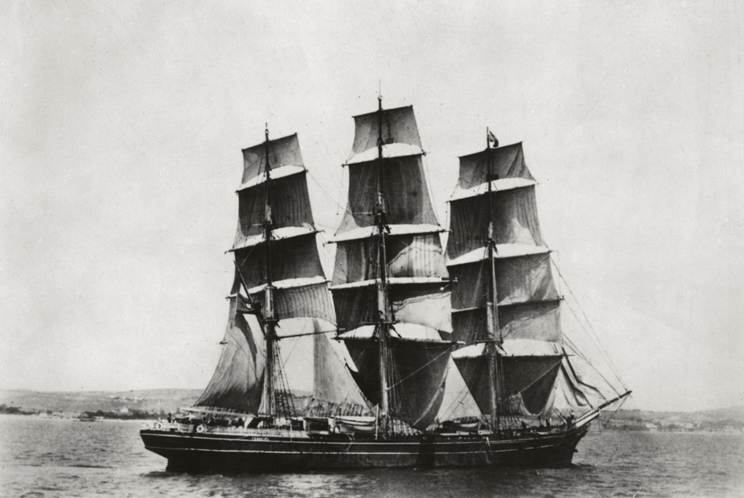
Although no one realized it then, selling the ship to a Portuguese company probably saved her life.
When war broke out in 1914, Portugal at first remained neutral. The Portuguese ensign flying from the old ship’s gaff protected her from attack. Had our old ship still been flying the red ensign, she would have been easy pickings for German submarines who were very active in the Atlantic around Dakar.
By 1916, World War 1 was at its height, our old clipper, now Ferreira, had been sailing under the Portuguese ensign for more than 20 years. The ship was under the command of Captain Frederic Vincenzo da Sousa
But then everything changed.
On March 9th 1916, Ferreira was moored at Laurenço Marques, the capital of what was then Portuguese Mozambique, loading coal for Moçâmedes in Angola, another Portuguese colony on the opposite side of Africa.
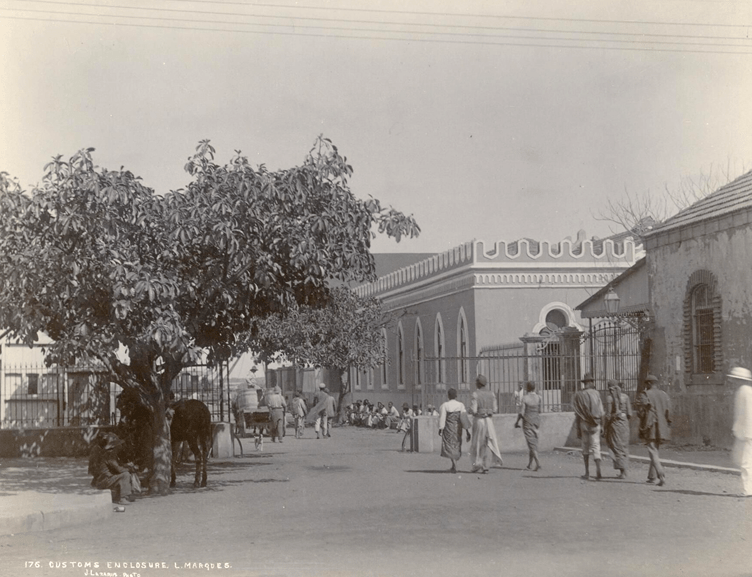
There had already been clashes between Portuguese and German troops in Angola so it was probably no great surprise to Captain da Sousa to learn that Germany had declared war on Portugal. Now, his Portuguese ensign, far from protecting him from attack, made him an easy target.
Over the next week or two most of his experienced crew were called up for active service in the Portuguese Navy and Captain da Sousa was left with the challenge of finding men to replace them. He had persuaded the navy recruitment officer to leave him with six apprentices, all under 18, his cook and two foreign sailors. It was not easy to find anyone willing to volunteer to fill the vacancies on a ship proposing to sail into a war zone, but eventually, da Sousa managed to recruit a few locals who had never been to sea before and a couple of fishermen, making his total crew up to 18. It was far from adequate for a ship of this size but it was all he could muster.
Ferreira had come to Laurenço Marques for coal. At the turn of the century, everything new was driven by steam and Mozambique was a valuable source of the coal needed to drive industry. Still today, the economy of Southern Africa is heavily dependent on coal and much of it still comes from Lourenço Marques, now called Maputo.
Coal can be a difficult cargo. It is dense and therefore brings the vessel down to her load line with plenty of hold space still left empty. It can also be quite mobile. For the ship to be stable, the cargo must not move around, even in the worst weather. To ensure a loose cargo like coal doesn’t move, normal practice is to divide the hold space into smaller cells, using shifting boards.
This process needs skill and experience, something which Captain da Sousa’s new crew were seriously lacking.
Ferreira left Mozambique on 23rd April 1916 with 1,142 tons of coal bound for Moçâmedes, in Southern Angola. All that coal did not even fill the lower hold and the ‘tween deck was empty. This is never a good arrangement. Empty space below the waterline raises the centre of buoyancy and makes the vessel more difficult to handle in heavy weather.
Captain da Sousa’s log for that voyage gives us a vivid account of the events that followed and her narrow escape from destruction.
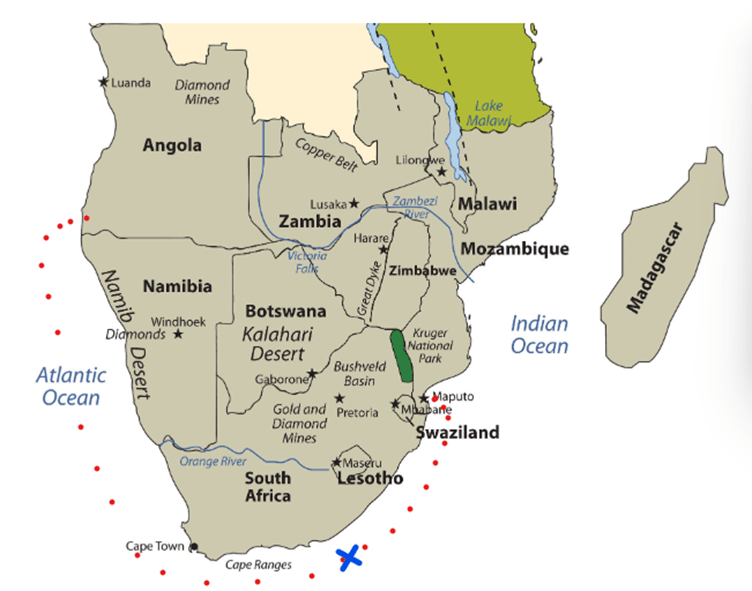
The passage to Moçâmedes would take them round the Cape of Good Hope, which used to be known as the Cape of Storms. These waters, where the Atlantic and Indian Oceans meet, can be treacherous for ships. The warm Agulhas current from the Indian Ocean to the east comes up against the cold Benguela current from the South Atlantic to the west. Dangerous waves from these currents have caused many shipwrecks. According to folklore, these shipwrecks led to the legend of the Flying Dutchman, a ghost ship doomed to sail the oceans forever after being lost in a severe storm near the Cape. Offshore, the winds blow in opposite directions depending on the time of year.
One week into her passage and her new crew were just beginning to find their way around the ship. She was between Port Elizabeth and East London, off what is now Eastern Cape, when a fierce storm struck. This is the same area where, more than 40 years earlier, Cutty Sark had lost her rudder in the famous tea race against her arch rival Thermopylae.
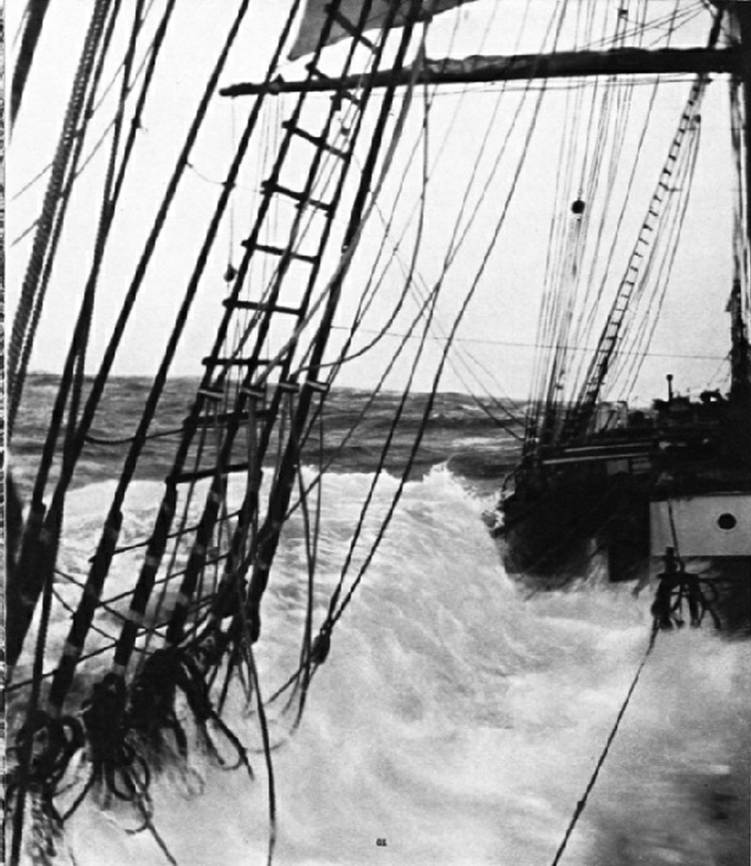
Ferreira was battered by heavy seas which damaged her rigging and carried some poultry overboard. The new crew soon began to realise what they had let themselves in for.
The next day, 1st May, the weather got even worse and the ship was rolling so heavily that down in the cargo hold, the coal shifted and she developed a bad list to port.
The only way down into the hold is through one of the three cargo hatches. The deck was awash and the seas were so heavy that it was impossible to open the hatches to re-trim the coal until the next day.
As soon as he was able, Captain da Sousa ordered some of the boards to be taken off the main hatch to give access. He sent the apprentices down into the hold with two shovels and one hurricane lamp, which was all had.
The only way to bring the ship back onto even keel was for the lads to shovel the coal uphill, while the captain fought to keep the ship head to wind. We can’t begin to imagine what it was like for them down in the darkness of the hold, the ship pitching and rolling, working in relays to throw the coal uphill into the darkness. But somehow, after many hours of desperate toiling, the ship was more or less level again. They staggered back to their bunks and collapsed in sheer exhaustion.
On the 4th the wind changed to SW and heavy seas were sweeping the decks. Ferreira was rolling so heavily that the cargo shifted again, worse than before and the ship developed such a severe list that the port bulwarks were almost underwater.
The only option was to send the crew back down into the hold once again to shovel tons of coal back into place. They fought bravely and at first, it seemed they had succeeded.
No sooner had they battened the hatches back down when the wind increased to a cyclone and Captain da Sousa was anxious for the safety of the masts. Once again the coal shifted and the list returned.
The heavy seas that continually washed over the deck meant that it was now too dangerous to open any of the hatches. The barometer fell still further and the outlook was so threatening that it was feared Ferreira would have to be abandoned.
In a desperate attempt to steady the ship, Captain da Sousa ordered the main and fore topgallant masts to be cut off. But then, as the ship gave a particularly violent roll, the mainmast, which is an iron tube, bent to such an extent that it dropped onto the bulwarks and threatened to capsize the ship.
All hands were employed in cutting away the rigging and sawing through the main mast, which, as it fell, had carried away the mizzen topmast and topgallant mast.
Just try to picture what that must have been like for this inexperienced crew, fighting to stay on their feet, drenched as seas rushed inboard, trying, with hand tools, to cut through wire rope rigging or sawing through the ½ inch (12mm) thick iron plates of the mast, knowing that if they failed, they and the ship would certainly be lost.
Over the next few days more and more rigging was pitched over the side until all that remained was the foremast and fore-topmast.
The weather improved slightly and by 9th the ship was once more in navigable order, although in a very sorry state indeed.
At 1 a.m. on 10th they were sighted by the Shaw Saville Liner Kia-Ora outward bound from Cape Town to Australia. Captain da Sousa went on board Kia-Ora, which offered to carry him and his crew to Australia, but that meant he would have to abandon his broken old ship.
For anyone else, it might have been a tempting offer; his crew would certainly have relished the prospect. But Captain da Sousa had a great affection for his old ship and he declined the offer. At his request, Kia-Ora did send a wireless message to Cape Town asking for assistance to be sent out to Ferreira, then worried about enemy submarines in the area, she hurried away.
For the next two days very strong winds and heavy seas breaking inboard made it impossible for the inexperienced crew to work the few remaining sails and she drifted dangerously towards the coast. Ferreira was only 30 miles from shore and certain shipwreck, when she was sighted by the Blue Funnel steamer Indraghiri bound from Durban to Cape Town, which offered to tow Ferreira to port. As she was drifting dangerously close to land Captain da Sousa accepted this offer and the two arrived in Table Bay on 14th May.
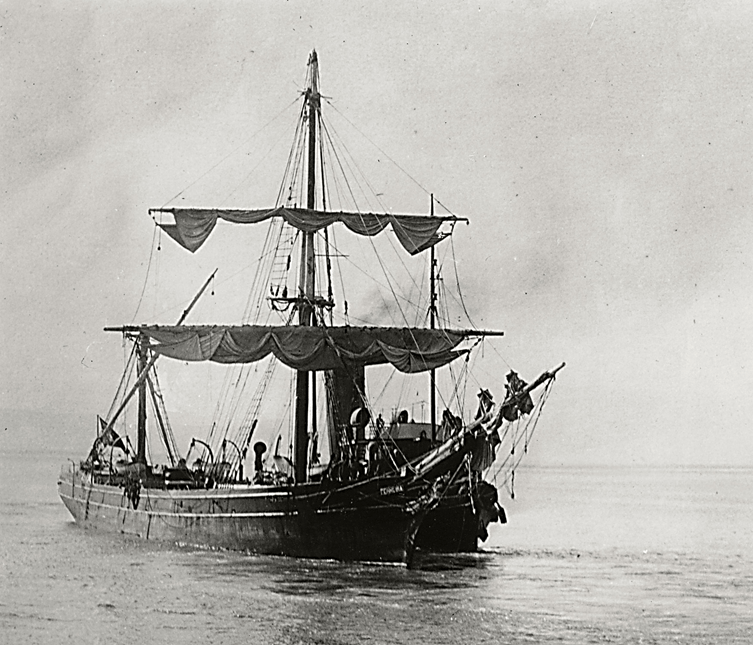
Ferreira was towed into port with only her fore lower mast and topmast and her mizzen lower mast still standing. The only yards remaining aloft were the foreyard, the fore lower topsail yard and the crossjack. The bowsprit and jibboom were intact but the spanker gaff and boom were both gone.
When the mainmast fell it had smashed in about 20 feet of the port rail and broken the port cathead. Fortunately the hull was found to be sound and the dreaded cargo intact.
The old clipper was only insured for £700 but the cost of repairs was estimated at £2,250.
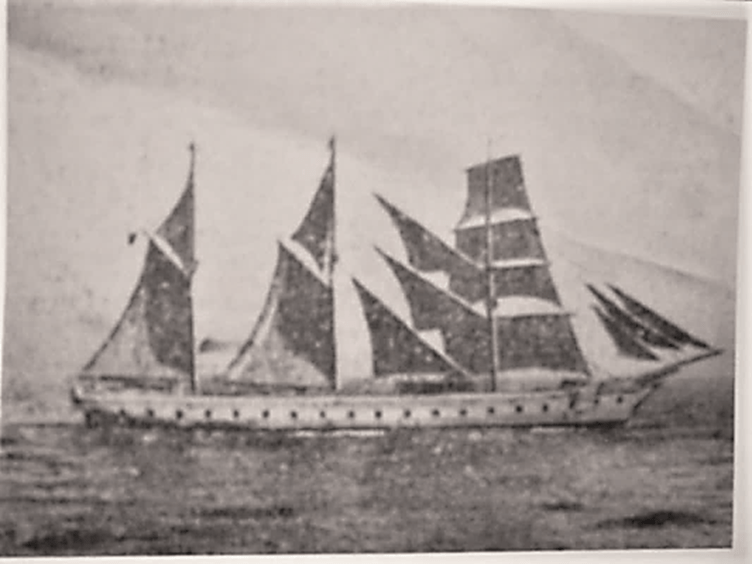
It was soon realised that, because of the war, a complete outfit of new masts and spars would cost a small fortune and so it was decided to convert the old full-rig ship into a barquentine.
Materials were hard to come by and the whole refit took nearly 18 months, which meant that the old ship remained peacefully in Cape Town whilst the war raged out at sea.
At last, on 18th January 1918, the barquentine-rigged once more set off for Moçâmedes with her original cargo of coal, this time carefully and securely stowed. She was still at sea when the war ended in November.
The fascinating thing is, that if it had not been for this near disaster, Cutty Sark would probably not be here today.
Being out of action in the safe port of Cape Town for 18 months, meant that she was at sea and exposed to enemy action for only fifty days of the nearly 2 years that Portugal was at war.
If she had not been sold to the Portuguese and had still been sailing under the British Red Ensign when war broke out, she would have been a sitting target for the German submarines.
If Captain da Sousa had accepted that tempting offer of a passage to Australia for himself and his exhausted crew, she would now be lying on the seabed of the South Atlantic
The forced re-rigging of Ferreira as a barquentine, with a much smaller crew, proved a blessing because it enabled her to operate much more economically with a small crew when large sailing ships were no longer viable as experienced crews became harder to find.
That fact, together with the profitability of UK cargoes caused by post-war shortage of ships, had much to do with ensuring that she was still in commercial service, making money, right up to 1922 when, at the age of 52, when she was spotted in Falmouth and bought by Captain Dowman who restored her back to her original rig and gave her back her original name.
Sadly, even then, more than a hundred years ago, none of those other beautiful tea clippers that had raced back from China every year were still afloat.
Only Cutty Sark survives to this day.
GT: 3.10.20
25.4.26
 Site Title